
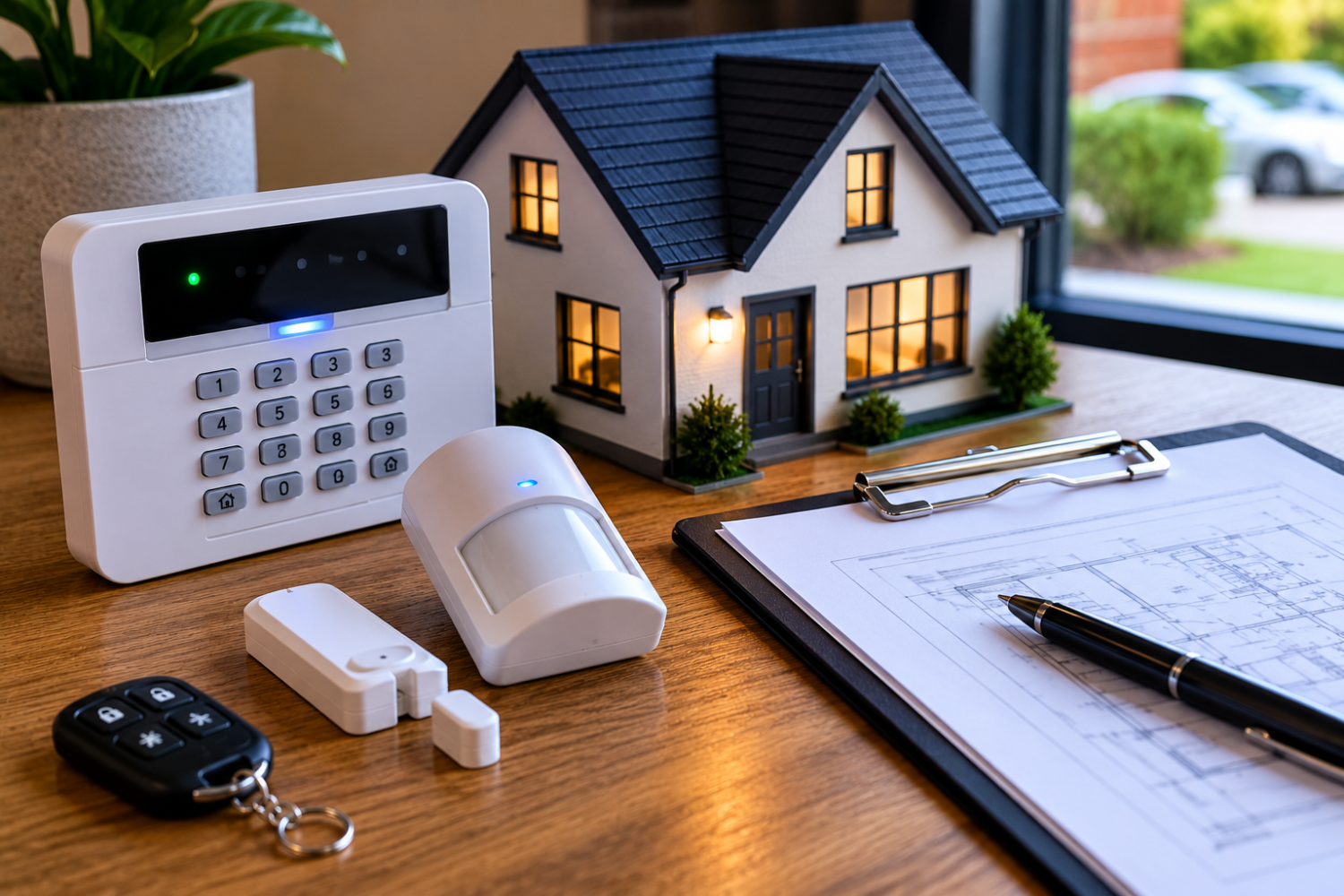
Intruder alarms can sometimes reduce insurance costs, but it depends on your insurer, your property, the type of alarm and whether the system is professionally installed and maintained. For homes and businesses across Surrey and West Sussex, the bigger benefit is often not just a possible discount, but having a properly designed system that helps reduce risk and supports your insurance requirements.
This guide explains how intruder alarms can affect insurance, when discounts may apply, what insurers usually look for, and what to check before you install a system. We will cover:
- Whether alarms reduce insurance costs
- Why insurers care about intruder alarms
- What type of alarm insurers may expect
- What alarm grades mean
- Monitored alarms versus bells-only alarms
- Why professional installation matters
- What maintenance records you may need
- What can go wrong with insurance claims
- Whether alarms are worth it without a discount
- What to ask your insurer before installation
- JPEC Fire and Security can help
Do intruder alarms actually lower insurance premiums?
Intruder alarms can lower insurance premiums in some cases, but it is not guaranteed. Some insurers may offer a discount, while others may simply see the alarm as part of good property security.
The important point is to check with your insurer before assuming a burglar alarm will reduce your premium. Some providers only recognise certain types of alarms, such as professionally installed systems, maintained systems, monitored alarms or systems installed by approved companies.
For a homeowner in Horley, the saving may be modest or there may be no direct discount at all. For a business in Crawley with stock, tools or higher-value contents, the insurer may be more likely to set specific alarm conditions.
What this means for you is simple: do not buy an alarm just because you expect a cheaper policy. Buy it because it suits your risk, protects the property and meets any insurer requirements.
Why do insurers care about intruder alarms?
Insurers care about intruder alarms because they can reduce the chance of theft, reduce damage and provide a faster response when an attempted break-in happens. A well-designed alarm can make a property less attractive and help limit losses.
An alarm is one part of a wider security picture. Insurers may also look at locks, doors, windows, shutters, safes, CCTV, access control, location, previous claims and the value of what is kept on site.
For example, a small shop in Redhill may need good locks, CCTV and an intruder alarm to protect stock and the till area. A landlord in Reigate may need to think about shared entrances, empty periods and access arrangements. A warehouse or business unit may need a more robust system than a standard home.
Insurers are usually interested in whether the security measures are suitable for the risk, not just whether a box has been ticked.
What type of alarm do insurers usually expect?
Insurer requirements vary, but they may expect the alarm to be suitable for the property and installed to recognised standards. In the UK, intruder alarm systems are commonly designed around BS EN 50131 and PD 6662, which are standards used in the security industry for alarm design, installation and maintenance. Secured by Design, the official police security initiative, also references BS EN 50131 and PD 6662 in its alarm guidance.
Some insurers may ask for evidence that the system has been installed and maintained by an approved or competent company. They may also ask whether the alarm is bells-only, monitored, police response, wired, wireless or graded for a certain risk level.
A basic DIY alarm may be useful for awareness, but it may not satisfy an insurer if they have specified a professional system. Always check the policy wording.
What do alarm grades mean?
An alarm grade is a security level used to describe the expected risk and performance of an intruder alarm system. The higher the grade, the more demanding the security expectation.
In plain English, the grade helps match the alarm to the risk. A lower-risk home may not need the same type of system as a business storing expensive equipment or a high-value property with insurer conditions.
Typical considerations include the value of contents, building layout, likely entry points, previous incidents and whether the alarm needs monitoring or police response.
You do not need to become an expert in alarm grades, but you should ask your installer what grade is being recommended and why. If your insurer has specified a grade, tell your installer before the system is designed.
JPEC Fire and Security can survey homes and businesses in Horley, Reigate, Redhill, Crawley and the wider Surrey and West Sussex area, then explain suitable alarm options in plain English.
Does a monitored alarm make a bigger difference?
A monitored alarm may be more attractive to insurers than a bells-only alarm, especially for commercial premises or higher-risk properties. Monitoring means alarm signals are sent to an alarm receiving centre, rather than simply sounding a siren.
A bells-only alarm makes noise at the property. This can deter intruders and alert neighbours, but it relies on someone noticing and taking action. SSAIB guidance describes bells-only alarms as a basic option and notes they may be unlikely to satisfy an insurer for commercial premises.
A monitored alarm can notify keyholders or, where the system is set up for it and meets the right requirements, support police response. This is more structured, but it also costs more and normally involves ongoing monitoring fees.
The right choice depends on the property, the insurer and your appetite for ongoing costs.
Why does professional installation matter?
Professional installation matters because the alarm needs to be designed around real risks, not just fitted in convenient places. Poor sensor positions, weak coverage or unsuitable equipment can make the system unreliable.
Some insurers may only recognise alarms that have been installed and maintained by a professional security company. Certain insurance requirements may also refer to NSI or SSAIB approved companies. NSI and SSAIB are UK certification bodies that inspect and approve security companies against industry standards.
For a simple home in Horley, professional installation helps make the alarm easier to use and more reliable. For a business in Crawley, it can be essential if the insurer has specified alarm conditions.
Professional commissioning also matters. Commissioning means the final testing and setup after installation, making sure the system works as intended before it is handed over.
What maintenance records might you need?
You may need service records to show that the alarm has been maintained properly. This is especially important if the alarm is linked to an insurance requirement.
An intruder alarm is not something you install once and forget. Batteries fail, sensors can move, doors can change, signal paths can be affected and user settings can be altered.
Useful records include:
- Installation certificate or handover paperwork
- Alarm grade or specification details
- Service and maintenance reports
- Fault reports and repair notes
- Monitoring agreement details if relevant
- Any insurer correspondence about alarm requirements
- Records of changes to the system
If your policy says the alarm must be maintained, keep the evidence. If you make a claim after a break-in, poor records can make things harder.
What can go wrong with an insurance claim?
Problems can happen if you tell your insurer you have an alarm but do not use it, maintain it or keep it working. If the alarm is a condition of your policy, failing to set it may affect a claim.
This does not mean every claim will automatically be refused, but it does mean you should take policy conditions seriously. Consumer insurance guidance commonly warns that if you say you have a burglar alarm, you need to use and maintain it correctly.
Common problems include the alarm not being set, faults being ignored, maintenance being missed, wrong keyholder details, old batteries, or the system not matching the insurer’s required specification.
If you are unsure what your policy requires, ask your insurer or broker in writing. It is better to clarify before an incident than after one.
Is an intruder alarm worth it if there is no insurance discount?
Yes, an intruder alarm can still be worth it even if it does not reduce your insurance premium. The main value is protection, deterrence and peace of mind.
A good alarm can make a break-in less attractive, alert you quickly and reduce the time an intruder spends on site. It can also work alongside CCTV, lighting, locks and access control.
For many homes and businesses in Surrey and West Sussex, the insurance saving is only part of the decision. The more important question is whether the alarm reduces risk in a practical way.
If you have tools, stock, vehicles, cash, equipment, private documents or valuable possessions, an alarm may be worthwhile even without a direct premium discount.
What should you ask your insurer before installing an alarm?
Before installing an alarm for insurance reasons, ask your insurer exactly what they require. Do this before you buy the system.
Useful questions include:
- Will an intruder alarm reduce my premium?
- Do you require a professionally installed alarm?
- Does the installer need to be NSI or SSAIB approved?
- What alarm grade is required?
- Is monitoring required?
- Is police response required?
- How often must the alarm be serviced?
- What paperwork do you need?
- Are there rules about setting the alarm when the property is empty?
- Are there keyholder requirements?
Ask for the answer in writing where possible. Then share it with your installer so the system can be designed correctly from the start.
What should you check before choosing an installer?
Choose an installer who asks about insurance requirements, property layout and how the building is used. A proper alarm design should reflect your actual risk.
Before choosing an installer, check whether they can explain alarm grades, maintenance needs, monitoring options and what paperwork you will receive. They should also be honest about whether a basic system is enough or whether a more robust design is needed.
A good installer should not promise insurance savings. They can help you install a suitable system, but your insurer decides the premium and policy conditions.
JPEC Fire and Security can explain alarm options clearly, help you understand trade-offs, and design a system around your property rather than offering a one-size-fits-all package.
Practical tips before you commit
Start by reading your insurance policy or speaking to your insurer. Then walk around the property and think about the areas that need protection.
For a home, that may include front and rear doors, ground-floor windows, garages and side access. For a business, it may include shutters, offices, stockrooms, loading bays, tills and areas where tools or equipment are stored.
If you are based in Reigate, Redhill, Horley or Crawley, a local survey can help identify the practical details, such as signal strength, cable routes, sensor locations, external sounder position and whether monitoring is worth considering.
The best result usually comes from matching three things: your property risk, your insurer’s requirements and a system you will actually use every day.
JPEC Fire and Security can help
JPEC Fire and Security can help with intruder alarm surveys, design advice, installation, commissioning, servicing, maintenance and fault support for homes, landlords, property managers and businesses.
If you are based in Horley, Reigate, Redhill, Crawley, Surrey or West Sussex, get in touch with JPEC Fire and Security for a survey, design advice, servicing advice, maintenance support or a proper quote based on your property and requirements.
This article is general information only and is not personal fire safety, security, insurance or legal advice. Recommendations should always be confirmed through a proper survey, insurer requirements where relevant, and system design based on your specific site and needs.