Fire alarms should usually be serviced by a competent professional at least every six months, although some buildings may need more frequent checks depending on their size, use and fire risk. For homes, businesses, landlords and property managers across Surrey and West Sussex, regular fire alarm servicing is one of the simplest ways to keep a system reliable, reduce false alarms and support fire safety responsibilities.
This guide explains how often fire alarms should be serviced, what happens during a service, who is responsible, and what records you should keep. We will cover:
- What fire alarm servicing means
- How often fire alarms should be serviced
- Weekly testing versus professional servicing
- Who is responsible for arranging servicing
- What happens during a fire alarm service
- How long servicing usually takes
- What records and paperwork you need
- Common problems found during servicing
- What can happen if servicing is missed
- How to choose the right fire alarm company
- JPEC Fire and Security can help
What does fire alarm servicing mean?
Fire alarm servicing is a planned inspection and test of your fire alarm system to make sure it is working properly. It is different from a quick weekly test, which usually only checks that the alarm activates from one call point.
A proper service looks at the condition and operation of the system as a whole. This can include the control panel, detectors, manual call points, sounders, batteries, wiring, fault history and any linked equipment. The aim is to find problems before they affect safety.
For example, a small office in Redhill may have a straightforward system with a few detectors and call points. A larger premises in Crawley may have several zones, meaning different areas of the building are shown separately on the fire alarm panel. Both need servicing, but the time and detail involved will be different.
How often should fire alarms be serviced?
Most non-domestic fire alarm systems should be professionally serviced at least twice a year, which usually means every six months. Larger, higher-risk or more complex buildings may need servicing more often, such as quarterly.
The right frequency depends on the property and how the system is used. A small shop in Horley may have different needs from a care setting, warehouse, school, block of flats or multi-unit business premises.
More frequent servicing may be recommended if:
- The building has sleeping occupants
- The site is large or complex
- The fire alarm has regular faults or false alarms
- The system is linked to other equipment
- The premises has high public footfall
- The fire risk assessment recommends it
- An insurer or managing agent requires it
What this means for you is simple: six-monthly servicing is a common starting point, but the correct schedule should be confirmed by a competent fire alarm company and, where relevant, your fire risk assessment.
JPEC Fire and Security can advise property owners, landlords and businesses in Horley, Reigate, Redhill, Crawley and the wider Surrey and West Sussex area on a suitable servicing plan for their building.
Is weekly fire alarm testing the same as servicing?
No. Weekly fire alarm testing and professional servicing are not the same thing. Weekly testing is a basic user check, while servicing is a more detailed inspection carried out by a competent person.
A weekly test usually involves activating a different manual call point each week, checking that the alarm sounds, and recording the result in the fire alarm logbook. It helps confirm that the system can raise an alarm and that people in the building recognise the sound.
Professional servicing goes much further. It checks the health of the system, tests components in a planned way, reviews faults, checks standby batteries and identifies issues that a weekly test will not pick up.
For many businesses and managed buildings, both are needed. Weekly testing helps with routine management, while scheduled servicing helps prove the system is being properly maintained.
Who is responsible for arranging fire alarm servicing?
In most workplaces and shared residential areas, the person or organisation in control of the premises is responsible for fire safety arrangements. This is often called the Responsible Person.
Depending on the property, this could be:
- A business owner or employer
- A landlord
- A managing agent
- A property manager
- A facilities manager
- A building owner
- A tenant with control over part of the premises
In a block of flats in Reigate, for example, the responsibility may relate to communal areas such as corridors, stairwells and entrances. In a small business unit in Crawley, the business owner or occupier may be responsible for making sure the fire alarm is tested, serviced and recorded properly.
If you are unsure who is responsible, check your lease, management agreement, fire risk assessment and insurance requirements. If there is still doubt, get professional advice rather than assuming someone else is dealing with it.
What happens during a fire alarm service?
A fire alarm service checks whether the system is operating correctly and whether any faults, damage or changes need attention. The exact process depends on the type of system and the building layout.
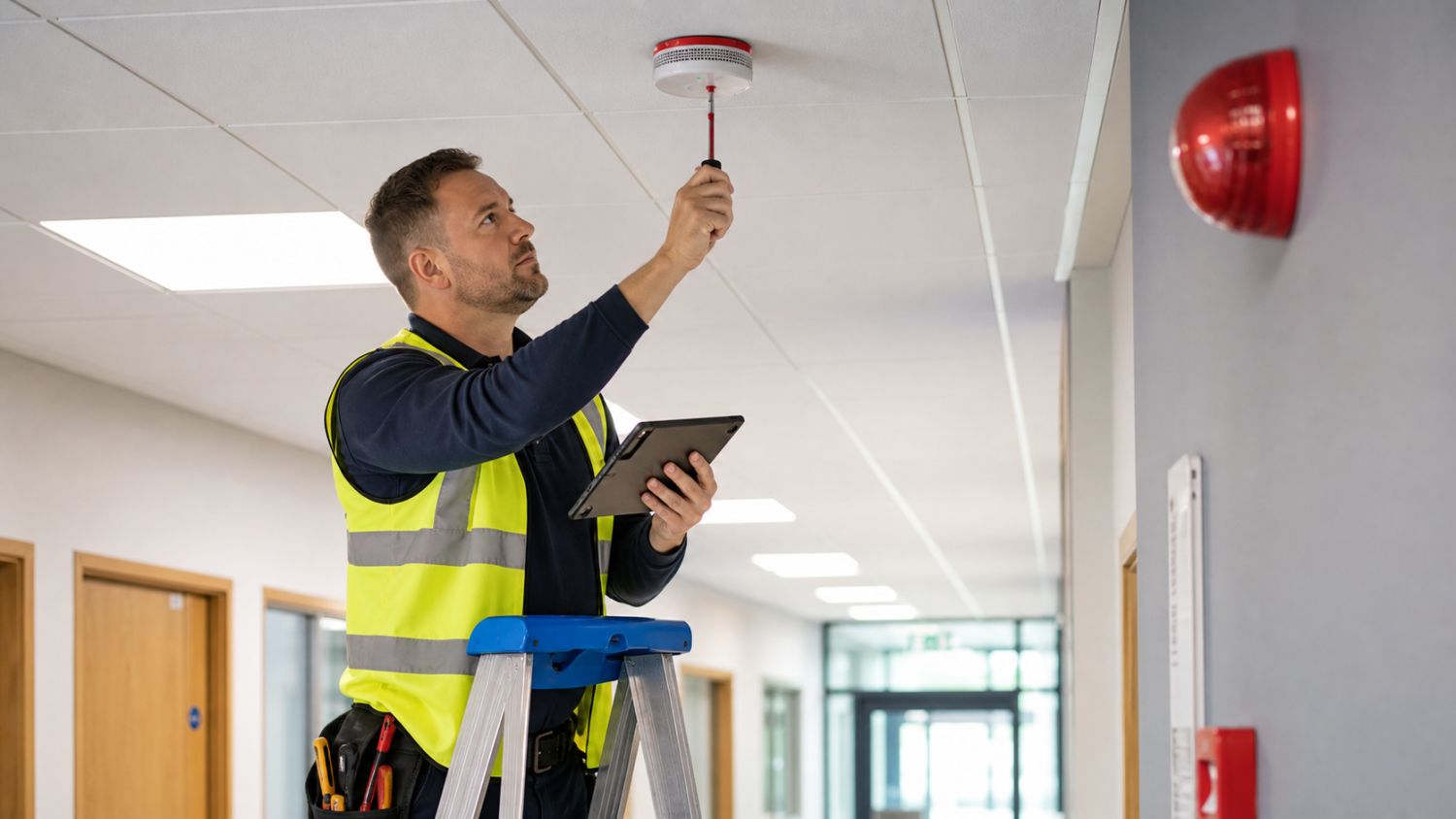
During a typical service, an engineer may check:
- The fire alarm control panel
- Manual call points
- Smoke and heat detectors
- Alarm sounders and beacons
- Backup batteries
- Wiring and visible damage
- Fault history on the panel
- Zone information and labelling
- Links to other systems where present
- The fire alarm logbook
The engineer may also check whether building changes have affected the system. For example, if a shop in Redhill has changed its layout, added partitions or altered storage areas, detection coverage may need reviewing.
A good service should not just be a quick button press. It should leave you with a clear record of what was checked, what was found, and what action is needed.
How much disruption should you expect?
Fire alarm servicing is usually low disruption, but the alarm will normally need to be tested during the visit. This means sounders may activate for short periods.
For many small premises, servicing can be completed in a few hours. Larger buildings, multi-zone systems or sites with access restrictions may take longer. If your building is occupied, it is sensible to warn staff, tenants or visitors in advance so they know the alarm test is planned.
The engineer may need access to rooms, risers, cupboards, plant areas, communal corridors and any spaces containing detectors or fire alarm equipment. If areas are locked or inaccessible, the service may be incomplete.
For landlords and property managers in Surrey and West Sussex, arranging access in advance can save time and avoid return visits.
What records and paperwork should you keep?
You should keep clear records of fire alarm tests, servicing, faults and repairs. These records help show that the system is being managed properly.
Useful records include:
- Weekly fire alarm test entries
- Professional service reports
- Fault reports and repair notes
- Commissioning certificates for new systems
- Details of any system changes
- Battery replacement records
- False alarm history
- Fire risk assessment recommendations
A logbook can be paper-based or digital, but it should be easy to access when needed. If a fault has been found, record what action was taken and when it was resolved.
JPEC Fire and Security can help explain what records you should keep and can provide clear service documentation after maintenance visits.
What common problems are found during servicing?
Fire alarm servicing often finds small issues before they become serious. This is one of the main reasons regular maintenance is important.
Common problems include faulty detectors, weak backup batteries, damaged call points, poor labelling, panel faults, sounders not working correctly, and areas where access was not possible. In some cases, the system may no longer match the building because rooms have been changed, extended or used differently.
False alarms are another common issue. These can be caused by dust, steam, poor detector choice, damaged equipment or lack of maintenance. A professional service can help identify patterns and recommend practical improvements.
Not every issue means you need a new system. Sometimes a repair, replacement part, cleaning, relabelling or system adjustment is enough.
What happens if fire alarm servicing is missed?
If servicing is missed, faults can go unnoticed and the alarm may not work properly when it is needed. It can also create problems with compliance, insurance, property management and fire safety records.
Missed servicing may lead to:
- Increased risk of system failure
- More false alarms
- Poor evacuation warning
- Unresolved panel faults
- Weak or failed backup batteries
- Gaps in maintenance records
- Problems during inspections or audits
For a landlord, facilities manager or business owner, the biggest issue is not just the missed appointment. It is the lack of evidence that the fire alarm has been properly maintained.
If your system has not been serviced for a while, arrange an inspection rather than waiting for a fault to appear.
What should you check before choosing a fire alarm company?
You should choose a fire alarm company that understands fire safety, works to recognised standards, and explains recommendations clearly. The cheapest visit is not always the best value if it misses important checks.
Before booking, ask:
- Are they experienced with your type of property?
- Can they service your type of fire alarm panel?
- Will you receive a clear service report?
- Can they deal with faults and repairs?
- Do they explain issues in plain English?
- Can they advise if the system no longer suits the building?
- Do they offer ongoing maintenance support?
A good engineer should be practical and honest. They should tell you what needs urgent attention, what can be monitored, and where improvements may be worth considering.
JPEC Fire and Security are experienced local fire and security installers who can survey, service, maintain and advise on fire alarm systems across Horley, Reigate, Redhill, Crawley, Surrey and West Sussex.
Practical tips before your next service
A little preparation can make your fire alarm service quicker and more useful. Before the engineer arrives, make sure someone on site knows where the fire alarm panel is and can provide access to key areas.
It is also worth checking your logbook and noting any recent faults, false alarms or building changes. If tenants, staff or visitors will be present, let them know that testing may take place.
For managed buildings, confirm access to communal areas, cupboards, plant rooms and any locked rooms containing fire alarm equipment. If the engineer cannot reach parts of the system, the service may have limitations.
JPEC Fire and Security can help
JPEC Fire and Security can help with fire alarm servicing, maintenance, repairs, system checks and practical advice for homes, businesses, landlords and property managers.
If you are based in Horley, Reigate, Redhill, Crawley, Surrey or West Sussex, get in touch with JPEC Fire and Security for a survey, servicing advice, maintenance support or a proper quote based on your property and requirements.
This article is general information only and is not personal fire safety, security or legal advice. Recommendations should always be confirmed through a proper survey, fire risk assessment where relevant, and system design based on your specific site and needs.