
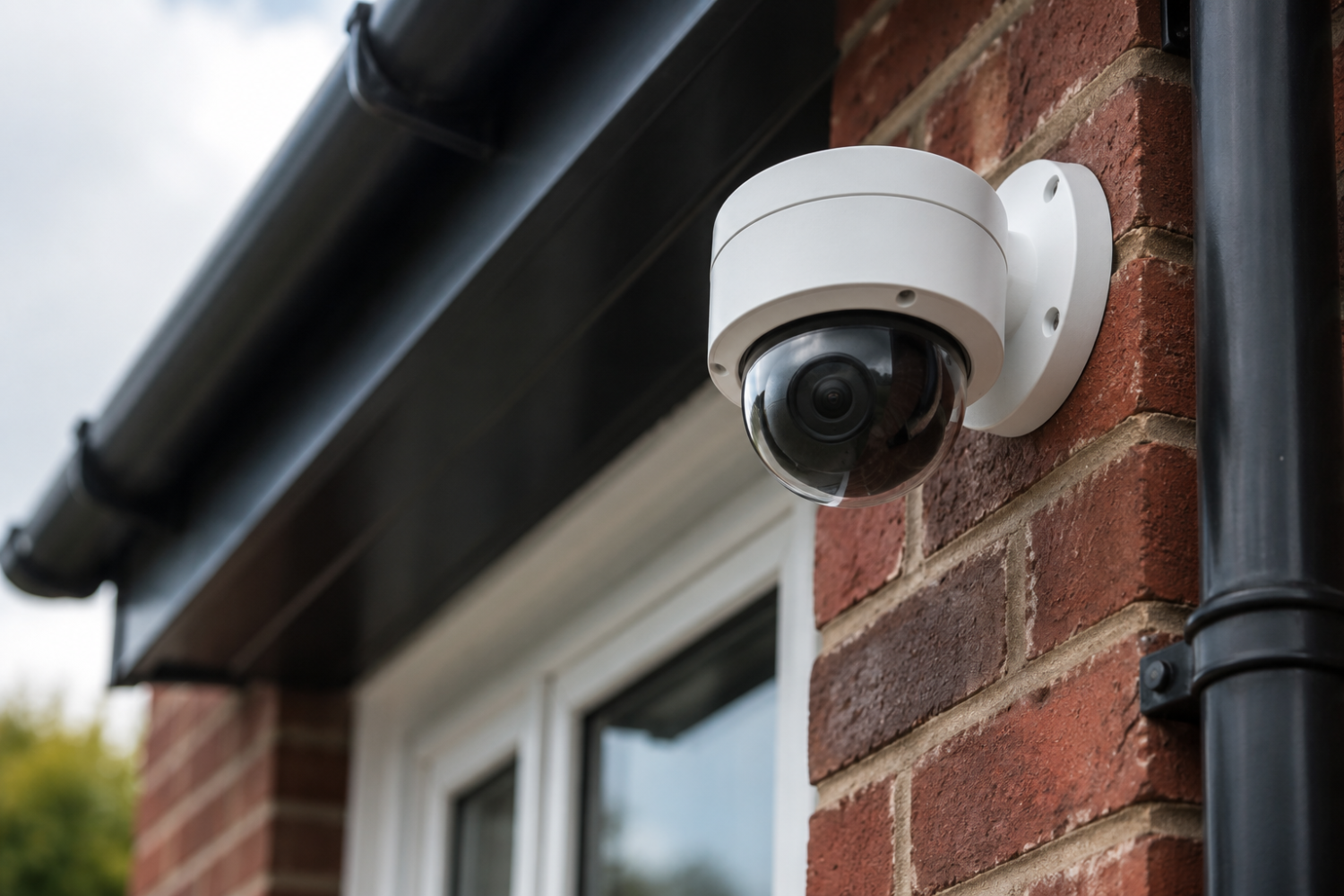
CCTV can be worth it if you want to deter crime, monitor key areas, record incidents and give yourself clearer evidence if something goes wrong. For homes, shops, offices, landlords and small businesses across Surrey and West Sussex, a well-designed CCTV system can be a useful part of wider security, but it needs to be positioned and managed properly.
This guide explains what CCTV can and cannot do, who it suits, what installation involves, and what you need to think about before fitting cameras. We will cover:
- What CCTV is
- Whether CCTV is worth it
- Who CCTV suits
- What CCTV can and cannot do
- CCTV for homes
- CCTV for businesses and landlords
- What the UK rules say
- What installation involves
- How much disruption to expect
- Common CCTV mistakes
- What maintenance is needed
- JPEC Fire and Security can help
What is CCTV?
CCTV means closed-circuit television. In simple terms, it is a camera system used to monitor and record activity around a property.
A CCTV system can be very simple, such as a few cameras recording to a small recorder. It can also be more advanced, with remote viewing from your phone, alerts, night vision and cameras covering multiple entrances, yards or internal areas.
CCTV is not the same as an intruder alarm. An alarm alerts you when someone enters or triggers a sensor. CCTV helps you see what happened, monitor activity and keep a record. In many properties, the two work best together.
Is CCTV actually worth it?
CCTV is often worth it when it is installed for a clear reason and designed around the real risks at your property. It is less useful when cameras are fitted randomly without thinking about what you actually need to see.
For example, a homeowner in Horley may want to cover a driveway, front door and side gate. A small shop in Redhill may need cameras on the entrance, till area and stockroom. A business unit in Crawley may need coverage for vehicle access, loading areas and out-of-hours activity.
- CCTV is usually worth considering if you want to:
- Deter unwanted behaviour
- Record evidence after an incident
- Monitor entrances, exits or yards
- Support staff safety
- Check deliveries or visitor activity
- Protect stock, tools, vehicles or equipment
- Improve security alongside alarms and access control
The value depends on the design. One correctly placed camera can be more useful than several badly positioned ones.
Who does CCTV suit?
CCTV suits homes, landlords, property managers and businesses where there is a genuine need to monitor or record key areas. It is especially useful where entrances, car parks, stock areas, shared spaces or vulnerable access points need extra security.
CCTV may suit:
- Homeowners with driveways, side gates or outbuildings
- Shops and offices with public access
- Warehouses and small industrial units
- Landlords managing shared entrances or car parks
- Property managers responsible for communal areas
- Businesses storing tools, stock or vehicles
- Sites with previous incidents or repeated concerns
It may not be suitable if the issue is better solved with lighting, locks, fencing, access control or an intruder alarm. CCTV can support security, but it should not be used as a substitute for basic physical protection.
JPEC Fire and Security can survey properties across Horley, Reigate, Redhill, Crawley, Surrey and West Sussex and explain whether CCTV is the right option, or whether another security measure would make more sense.
What can CCTV do?
CCTV can help you see and record what happens in and around your property. It can also act as a visible deterrent, especially when cameras are placed clearly at entrances or vulnerable points.
A good CCTV system can help with:
- Recording incidents clearly
- Identifying times, vehicles or movement
- Monitoring deliveries
- Checking who entered or approached a property
- Supporting insurance or police reports
- Helping staff feel safer
- Reviewing activity after a complaint or dispute
Image quality matters. A camera that shows a vague blur at night may not be useful. The right lens, angle, lighting and recording settings all make a difference.
For businesses, CCTV should be designed around the purpose. For example, monitoring a till area is different from covering a car park or loading bay.
What can CCTV not do?
CCTV cannot physically stop someone entering your property. It can deter, record and alert in some cases, but it does not replace locks, doors, gates, alarms or good site management.
It also cannot guarantee clear evidence in every situation. Poor lighting, bad weather, dirt on the lens, incorrect camera angles or low-resolution equipment can reduce the quality of footage.
CCTV may also create privacy issues if it records areas it does not need to cover. This is especially important for businesses, landlords and anyone whose cameras capture public paths, shared areas or neighbouring property.
The best CCTV system is practical and proportionate. It should cover the right areas without over-recording.
Is CCTV worth it for homes?
CCTV can be worth it for homes if you want extra visibility around entrances, driveways, gardens or outbuildings. It can be especially useful where you have vehicles, tools, deliveries or side access points.
For a homeowner in Reigate or Horley, a simple system might cover the front door, driveway and rear access. The aim is not to cover every inch of the property. The aim is to record the areas where people would most likely approach.
Homeowners should be careful with camera angles. If your cameras only capture your own property, the data protection rules are generally simpler. If they capture public areas, shared spaces or neighbours’ property, you may have extra responsibilities.
Doorbell cameras and small wireless cameras can be useful, but they are not always the same as a properly designed CCTV system. Battery life, Wi-Fi strength, subscription costs and recording quality can all affect performance.
Is CCTV worth it for businesses and landlords?
CCTV can be very useful for businesses and landlords, but it needs to be handled properly. If you are recording staff, customers, tenants, visitors or members of the public, you need to think about privacy, signage, access to footage and how long recordings are kept.
A shop in Redhill may use CCTV to monitor customer areas, entrances and stock. A business unit in Crawley may need cameras for yards, shutters, loading bays and parking areas. A landlord may want cameras in shared entrances, bin stores or car parks, but not in private areas where people expect privacy.
For businesses and landlords, CCTV should have a clear purpose. “Because we can” is not a strong reason. “To protect staff, deter theft and monitor the shared entrance” is clearer and easier to justify.
What are the UK CCTV rules?
In the UK, CCTV rules depend on how the system is used and what it records. Business CCTV and cameras covering public or shared areas are usually subject to data protection requirements.
For businesses, the Information Commissioner’s Office, known as the ICO, gives guidance on CCTV and video surveillance. The ICO is the UK regulator for data protection. Its guidance explains that organisations using CCTV need to think about fairness, transparency, accountability and people’s rights.
In practical terms, this usually means you should:
- Have a clear reason for using CCTV
- Tell people CCTV is in use
- Avoid recording areas you do not need
- Keep footage secure
- Limit who can view recordings
- Keep footage only as long as needed
- Respond properly if someone asks for footage of themselves
GOV.UK also explains that data protection rules do not usually apply where someone installs CCTV on their own home for household purposes, such as protecting it from burglary. However, if cameras capture areas beyond your property, the position can become more complicated.
This article is not legal advice, but the safe approach is simple: use CCTV responsibly, keep it proportionate, and avoid recording more than you need.
What does CCTV installation involve?
CCTV installation usually starts with a survey. The installer looks at what you want to protect, where cameras could go, what the lighting is like, how cables can be routed, and where recordings will be stored.
A typical installation may include:
- Site survey and advice
- Camera position planning
- Cable routing or wireless setup
- Fitting cameras securely
- Setting up the recorder or cloud storage
- Connecting remote viewing if required
- Testing day and night image quality
- Handover and user guidance
Commissioning means the final setup and testing after installation. This is where the installer checks the cameras are recording properly, the angles make sense, and you understand how to use the system.
JPEC Fire and Security can survey, design, install, commission and maintain CCTV systems, while explaining the options and trade-offs in plain English.
How much disruption should you expect?
Most CCTV installations are manageable, but the disruption depends on the number of cameras, cable routes, building type and access. A small home system may be completed quickly, while a larger business or multi-camera site may take longer.
In an existing building, installers may need to run cables through lofts, ceilings, walls, cupboards or external routes. Some drilling may be needed. For businesses, installation can often be planned around quieter trading hours or agreed access times.
For landlords and property managers, tenant communication is important. If cameras are being fitted in communal areas, people should understand what is being installed and why.
Good planning reduces disruption. The clearer the camera positions and access arrangements are before work starts, the smoother the installation usually is.
What are common CCTV mistakes?
The most common CCTV mistake is fitting cameras without a clear purpose. This often leads to poor angles, wasted coverage and footage that is not useful when an incident happens.
Other common mistakes include choosing cameras based only on price, relying on poor Wi-Fi, ignoring night-time image quality, placing cameras too high, recording neighbours unnecessarily, or forgetting to maintain the system.
Avoid these common problems:
- Cameras pointing at the wrong area
- Poor night-time footage
- Not enough storage
- No clear signage for business use
- Weak passwords or insecure remote access
- Dirty lenses reducing image quality
- No plan for who can view footage
- Keeping recordings for longer than needed
A good CCTV system should be simple to use and designed around real-life events, not just impressive specifications.
What maintenance is needed?
CCTV systems need light but regular maintenance. Cameras can move, lenses can get dirty, hard drives can fail, software may need updates, and recording settings can be changed by accident.
Maintenance may include checking camera views, cleaning lenses, testing playback, checking recording dates and times, reviewing storage, confirming remote access, and checking that night vision is working.
For a small office in Surrey or a shop in West Sussex, a quick routine check can prevent the worst outcome: finding out after an incident that the camera was not recording.
If your system is business-critical, planned maintenance is sensible. It helps keep the system reliable and gives you confidence that footage will be available when needed.
What should you check before choosing a CCTV installer?
Choose an installer who asks what you need the system to achieve before recommending equipment. CCTV should be designed around your property, not sold as a one-size-fits-all package.
Before choosing an installer, ask:
- What areas should the cameras cover?
- Will the footage be clear enough at night?
- How long will recordings be stored?
- Can the system be viewed remotely?
- How will the system be secured?
- What happens if the internet goes down?
- What maintenance is recommended?
- What privacy issues should be considered?
A good installer should be honest about limitations. For example, a camera may be able to show movement over a wide area, but not clearly identify a face or number plate at a distance. Camera choice and positioning matter.
Practical tips before you commit
Before installing CCTV, walk around your property and think about where incidents are most likely to happen. Look at entrances, side access, driveways, yards, gates, stock areas and shared spaces.
Think about daytime and night-time use. A camera view that looks fine in daylight may be poor at night if there is glare, darkness or bright headlights.
You should also decide who will need access to recordings. For a home, that may be simple. For a business or managed property, you need a clearer process.
If your property is in Horley, Reigate, Redhill or Crawley, a local survey can help identify practical issues such as cable routes, lighting, camera height and whether CCTV should be paired with alarms, access control or security lighting.
JPEC Fire and Security can help
JPEC Fire and Security can help with CCTV surveys, design advice, installation, commissioning, servicing, maintenance and fault support for homes, landlords, property managers and businesses.
If you are based in Horley, Reigate, Redhill, Crawley, Surrey or West Sussex, get in touch with JPEC Fire and Security for a survey, design advice, servicing advice, maintenance support or a proper quote based on your property and requirements.
This article is general information only and is not personal fire safety, security or legal advice. Recommendations should always be confirmed through a proper survey, privacy considerations where relevant, and system design based on your specific site and needs.